
Industrial piping systems constantly face changes in temperature, pressure, vibration, and equipment movement. Without sufficient flexibility, these forces can create excessive stress on pipes, supports, valves, and connected machinery. Metallic expansion joints help manage these movements while maintaining the pressure integrity of the system.
Mahantam Engineering & Services manufactures metallic expansion joints in Vadodara for industries such as power, steel, cement, chemical processing, oil and gas, and marine engineering. Understanding how these components work helps plant engineers choose an appropriate configuration for each piping application.
What Is a Metallic Expansion Joint?
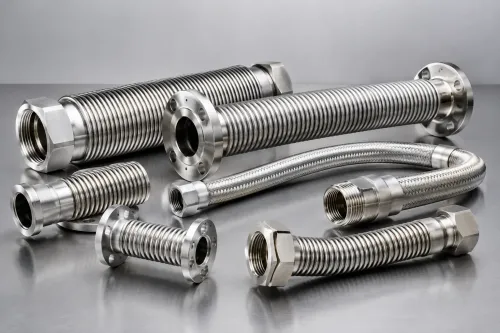
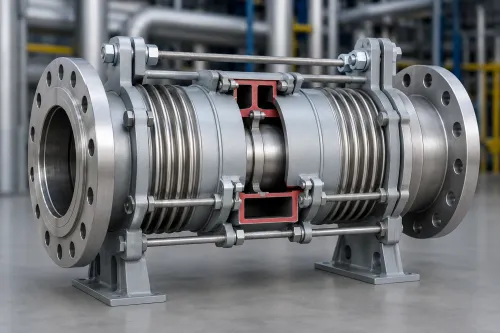
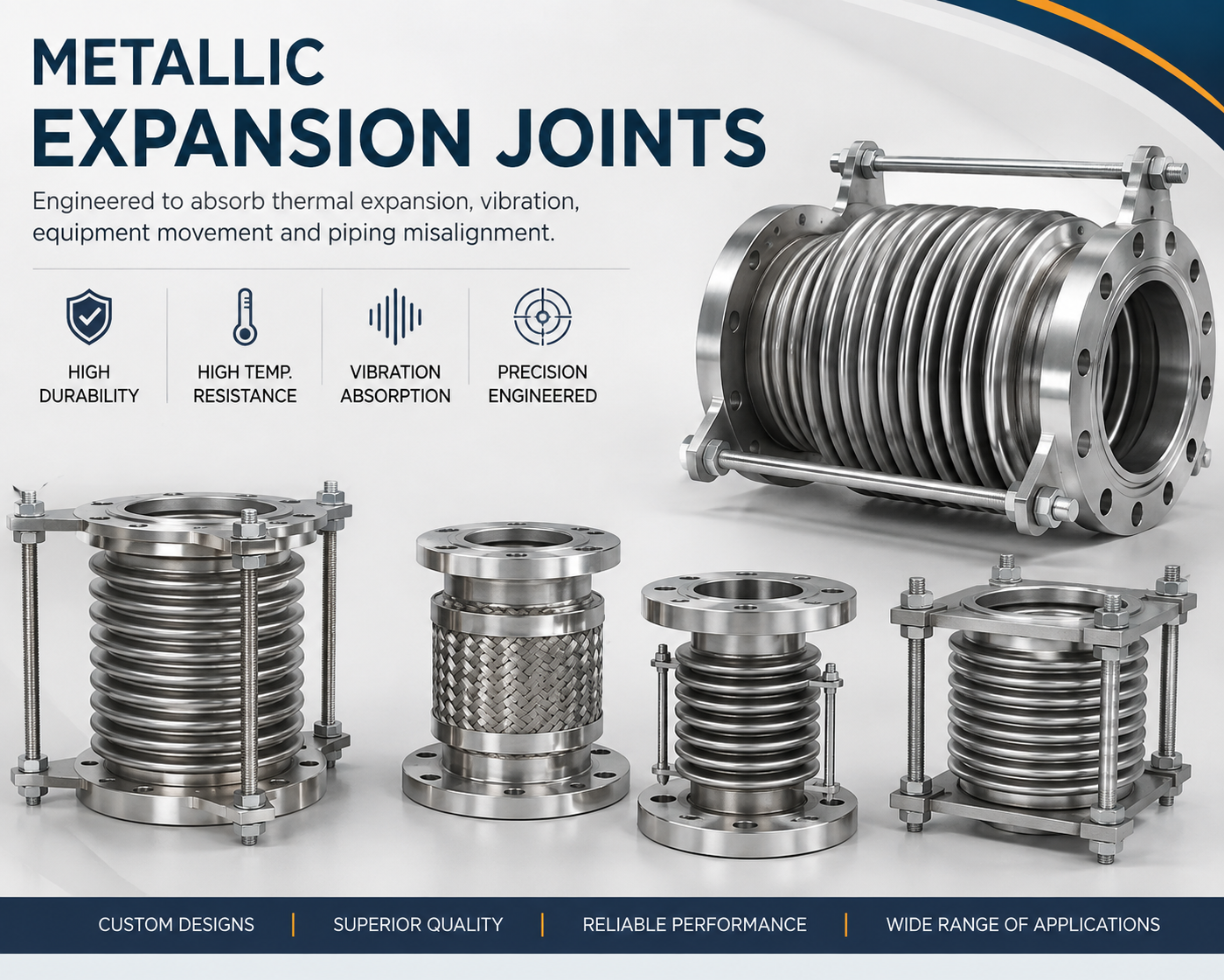
A metallic expansion joint is a flexible piping component containing one or more metal bellows. The bellows compress, extend, or deflect when movement occurs in the pipeline.
Depending on its design, the joint may accommodate:
- Axial movement along the length of the pipe
- Lateral movement perpendicular to the pipe axis
- Angular movement between connected pipe sections
- Vibration transmitted by rotating equipment
- Thermal expansion caused by operating temperature changes
Metallic joints are commonly manufactured using stainless steel and high-performance alloys. Inconel, Monel, and Hastelloy may be considered for applications involving high temperatures, corrosive media, or demanding process conditions.
Why Thermal Movement Requires Attention
Pipes expand when heated and contract when cooled. The amount of movement depends on the pipe material, operating temperature, installation temperature, and overall pipe length.
If this movement is restricted, the resulting loads may affect:
- Pipe supports and anchors
- Pump and turbine nozzles
- Heat exchangers
- Ducting connections
- Valves and process equipment
- Welded and flanged joints
A properly designed expansion joint introduces controlled flexibility into the system. However, the component must be evaluated as part of the complete piping arrangement rather than selected only by matching its nominal diameter.
Common Metallic Expansion Joint Configurations
Different movement conditions call for different designs.
Axial expansion joints
Axial joints primarily absorb compression and extension along the pipe axis. They are frequently used in straight pipeline sections with correctly designed anchors and guides.
Universal expansion joints
A universal configuration generally has two bellows connected by an intermediate pipe. It is suited to applications where greater lateral movement needs to be absorbed.
Gimbal expansion joints
Gimbal joints accommodate angular movement in one or more planes while restraining pressure thrust through their hardware. They are often applied in complex piping layouts.
Pressure-balanced expansion joints
These joints are designed to balance pressure thrust within the assembly. They can be useful where conventional main anchors cannot safely withstand the forces generated by internal pressure.
Information Required for Engineering
Reliable selection begins with complete operating data. Engineers generally review:
- Pipe or duct diameter
- Design and operating pressure
- Design and operating temperature
- Required axial, lateral, and angular movements
- Flow medium and corrosion characteristics
- Expected vibration or flow-induced conditions
- Number of operating cycles
- Available installation space
- Anchor and guide arrangement
- Applicable inspection and testing requirements
The bellows material, number of convolutions, ply arrangement, end connections, and external hardware can then be engineered around the actual service conditions.
Manufacturing Considerations for Vadodara Industries
Vadodara and the wider Gujarat industrial region contain chemical plants, engineering facilities, power projects, refineries, and equipment manufacturers. Expansion joints used in these environments may need to handle corrosive fluids, high operating temperatures, pressure fluctuations, and restricted installation spaces.
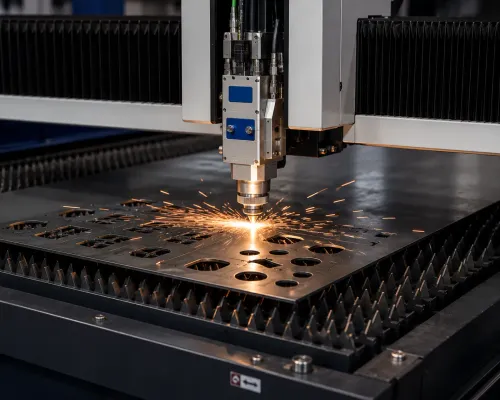
The company maintains two modern manufacturing units in Vadodara with in-house design, precision CNC manufacturing, testing, and quality assurance facilities. Metallic expansion joints can be custom manufactured in diameters up to 6000 mm, subject to the application and approved design requirements.
A correctly engineered metallic expansion joint can reduce piping stress and support safe movement absorption. Its effectiveness ultimately depends on accurate operating data, suitable material selection, proper anchoring, and installation that follows the approved system design.