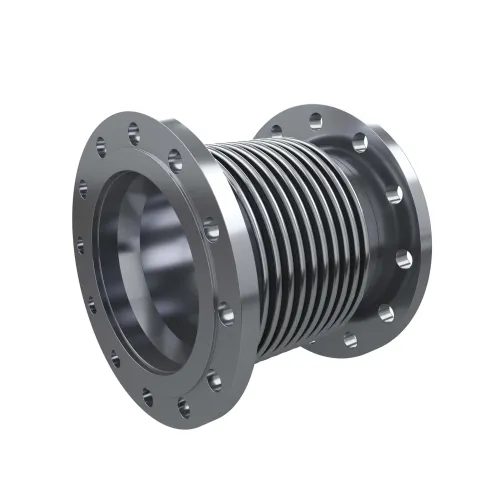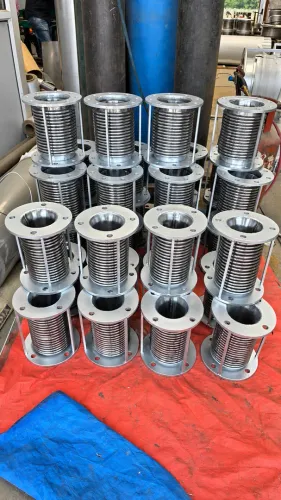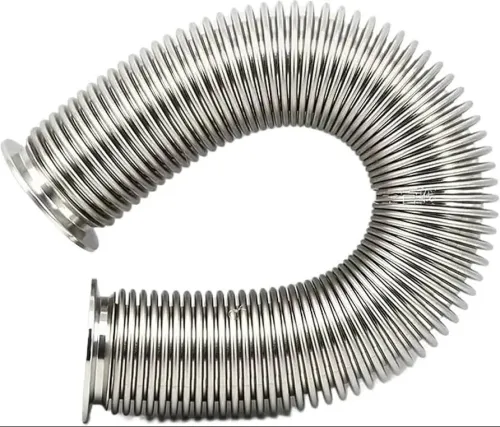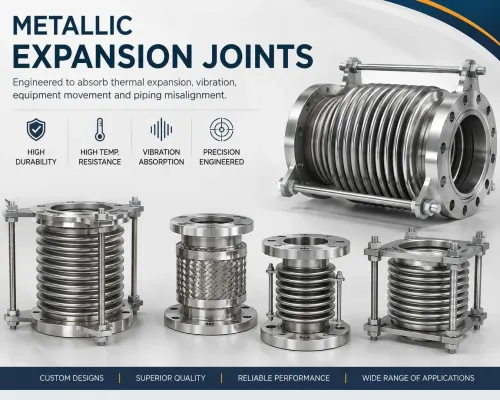
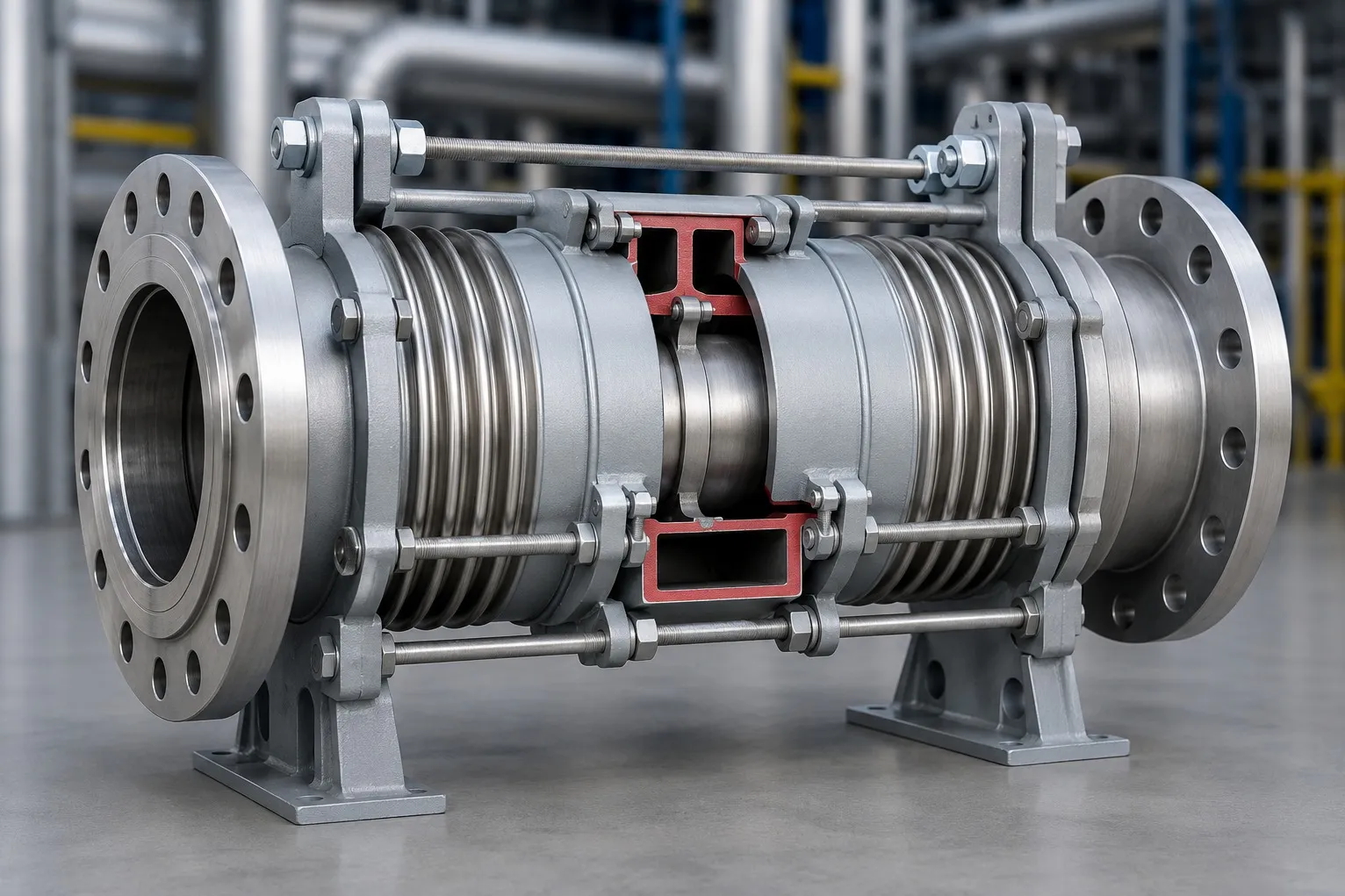
Expansion joints solve movement problems, but their flexibility introduces another engineering consideration: pressure thrust. In certain piping systems, this force can be difficult or impractical to transfer to conventional main anchors. Pressure Balanced Expansion Joints are designed for applications where movement accommodation is required while pressure thrust needs to be internally balanced.
Understanding this distinction is important when evaluating expansion joint configurations.
Internal pressure acting across the effective area of a bellows produces an axial force. In a conventional unrestrained arrangement, the piping system and its anchors must be capable of handling this force. In large-diameter or higher-pressure lines, the resulting anchor loads can become substantial.
A pressure balanced design incorporates additional bellows elements and structural components arranged so that pressure thrust is balanced within the expansion joint assembly while the required piping movement can still be accommodated.
This configuration can be particularly relevant near sensitive equipment. Turbines, pumps, compressors, vessels, heat exchangers, and other equipment may have defined allowable nozzle loads. Reducing the transfer of pressure thrust can therefore become an important part of piping engineering.
Before selecting this type of expansion joint, engineers should examine:
- Design pressure and temperature
- Required movement and its direction
- Piping geometry
- Available space
- Equipment nozzle load limitations
- Anchor feasibility
- Bellows material
- Process medium
- Installation orientation
Pressure balanced designs can be more complex than basic expansion joints, so detailed engineering data becomes essential.
A common mistake is to consider only thermal movement and overlook pressure thrust. Another is to assume that a pressure balanced joint eliminates every load acting on the connected piping. Piping designers still need to evaluate spring forces, friction, dead weight, dynamic effects, and other applicable system loads.
Vadodara has a substantial industrial ecosystem involving chemical, petrochemical, pharmaceutical, power, equipment manufacturing, and process engineering activities. In such installations, expansion joint decisions frequently need to coordinate with piping stress analysis and equipment requirements rather than being made independently.
Mahantam Engineering & Services supports engineered expansion joint requirements for industrial applications in Vadodara and wider Gujarat. Providing piping layout information along with pressure, temperature, movement, and equipment constraints enables a more meaningful design evaluation.
Pressure balancing is ultimately a system-level consideration. Where conventional anchors would experience excessive pressure thrust or where sensitive equipment requires careful load control, a properly designed pressure balanced expansion joint can offer a practical engineering approach.
Keywords