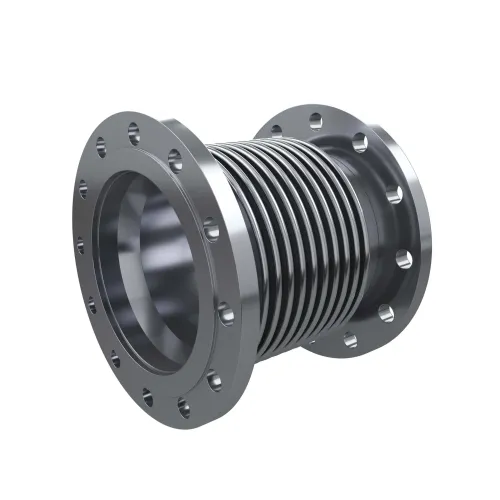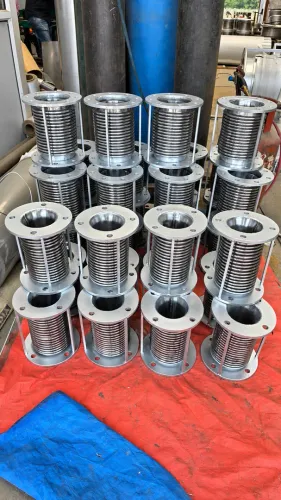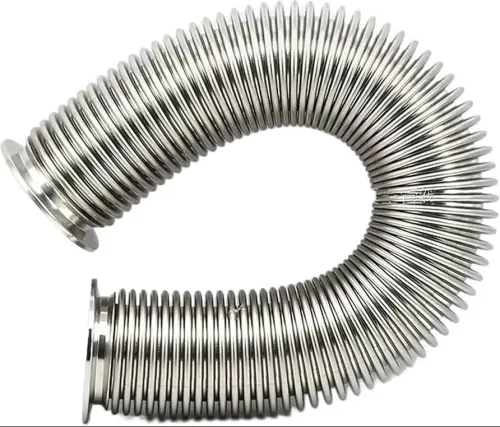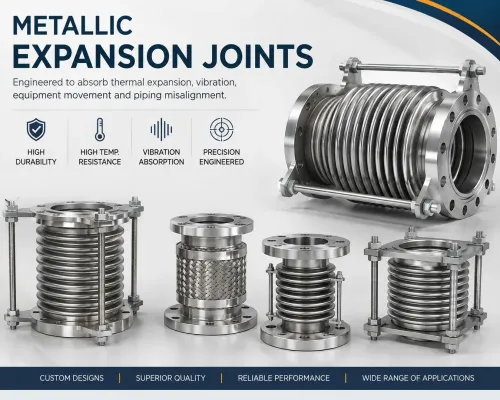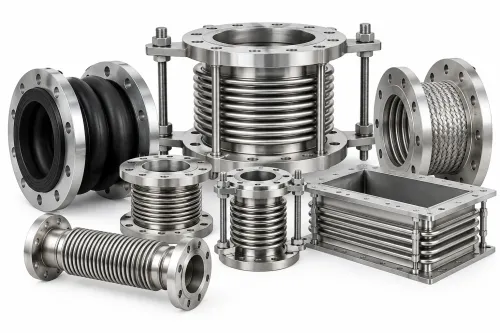
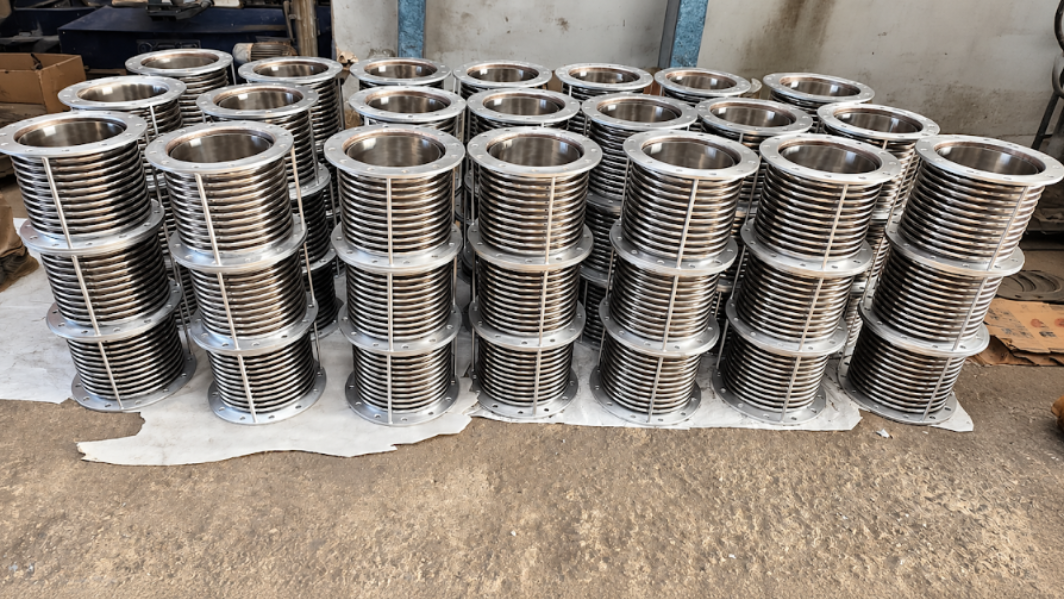
Not every expansion problem should be handled by allowing a bellows to move freely in several directions. In piping systems where thermal growth can be converted into controlled angular rotation, Hinged Expansion Joints provide a more restrained approach.
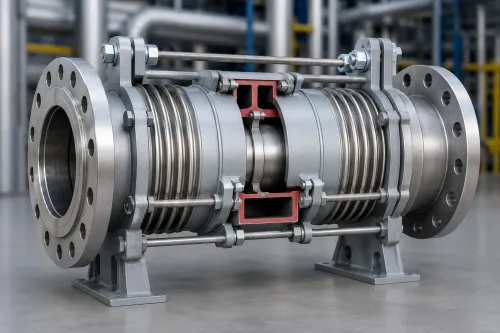
A hinged expansion joint generally consists of a bellows with hinge plates and pins designed to allow angular rotation in one plane. The hinge structure also restrains pressure thrust, making the assembly useful in piping systems where main anchor loads need to be controlled.
This combination of movement and restraint is the main reason hinged joints are evaluated for specific piping layouts.
They are often used in pairs or in systems of multiple joints. Rather than asking one bellows to absorb a large amount of axial compression, the piping geometry can be arranged so that thermal growth produces angular rotation across the hinged assemblies.
When evaluating this approach, engineers should avoid treating the expansion joint as an independent component. Its performance depends on the piping configuration around it.
Important considerations include:
- Required angular movement
- Distance between expansion joints
- Pipe length and thermal growth
- Design pressure
- Design temperature
- Hinge orientation
- Support and guide locations
- External structural loads
Orientation deserves particular attention. Because a conventional hinged joint permits rotation in a defined plane, incorrect positioning can prevent the system from moving as intended.
Another important consideration is the hinge hardware itself. These structural components are not merely movement guides. In a properly designed restrained expansion joint, they can transmit pressure thrust and other specified loads. Their design therefore needs to correspond with operating conditions.
For engineering and process facilities in Vadodara and throughout Gujarat, hinged arrangements may be considered where pipe routing provides enough geometry to use angular movement effectively. They can be found in industrial piping associated with process plants, utilities, hot gas lines, steam systems, and other thermal services where suitable.
Mahantam Engineering & Services works with industrial expansion joint requirements based on piping data and operating conditions. Sharing the expected thermal movement and system layout during enquiry allows the expansion joint configuration to be evaluated more accurately.
One of the most common specification mistakes is choosing a bellows first and attempting to make the piping arrangement suit it later. The better approach is the reverse: understand how the pipeline will move, determine the restraint strategy, and then engineer the expansion joint accordingly.
For piping systems with predictable single-plane angular movement, hinged expansion joints can provide controlled flexibility while helping manage pressure thrust within the engineered arrangement.
Keywords