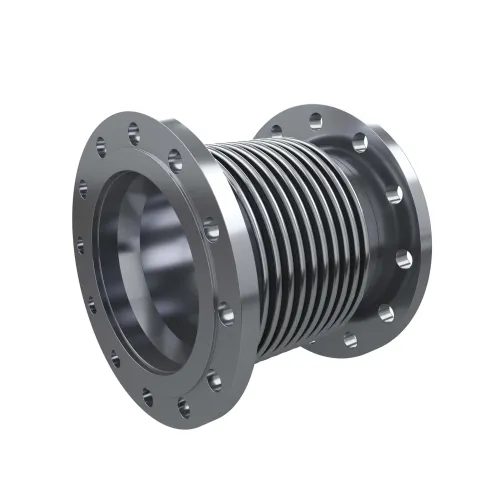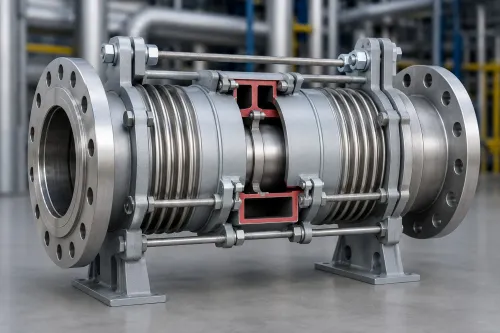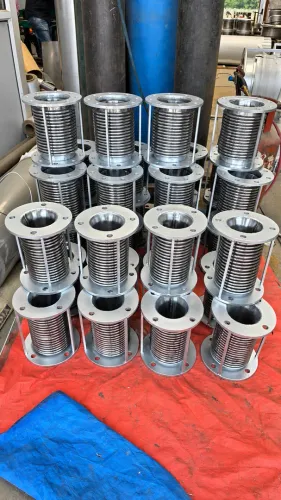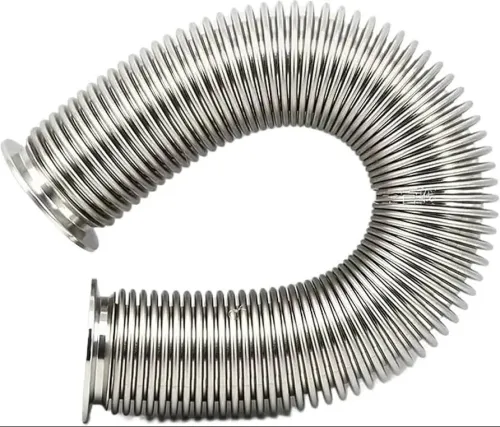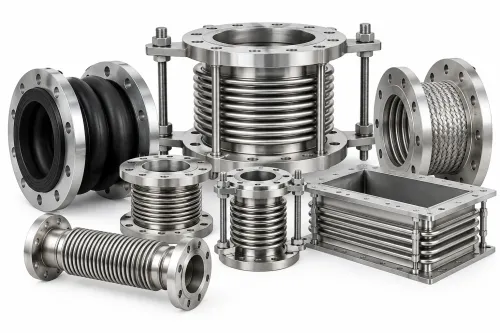
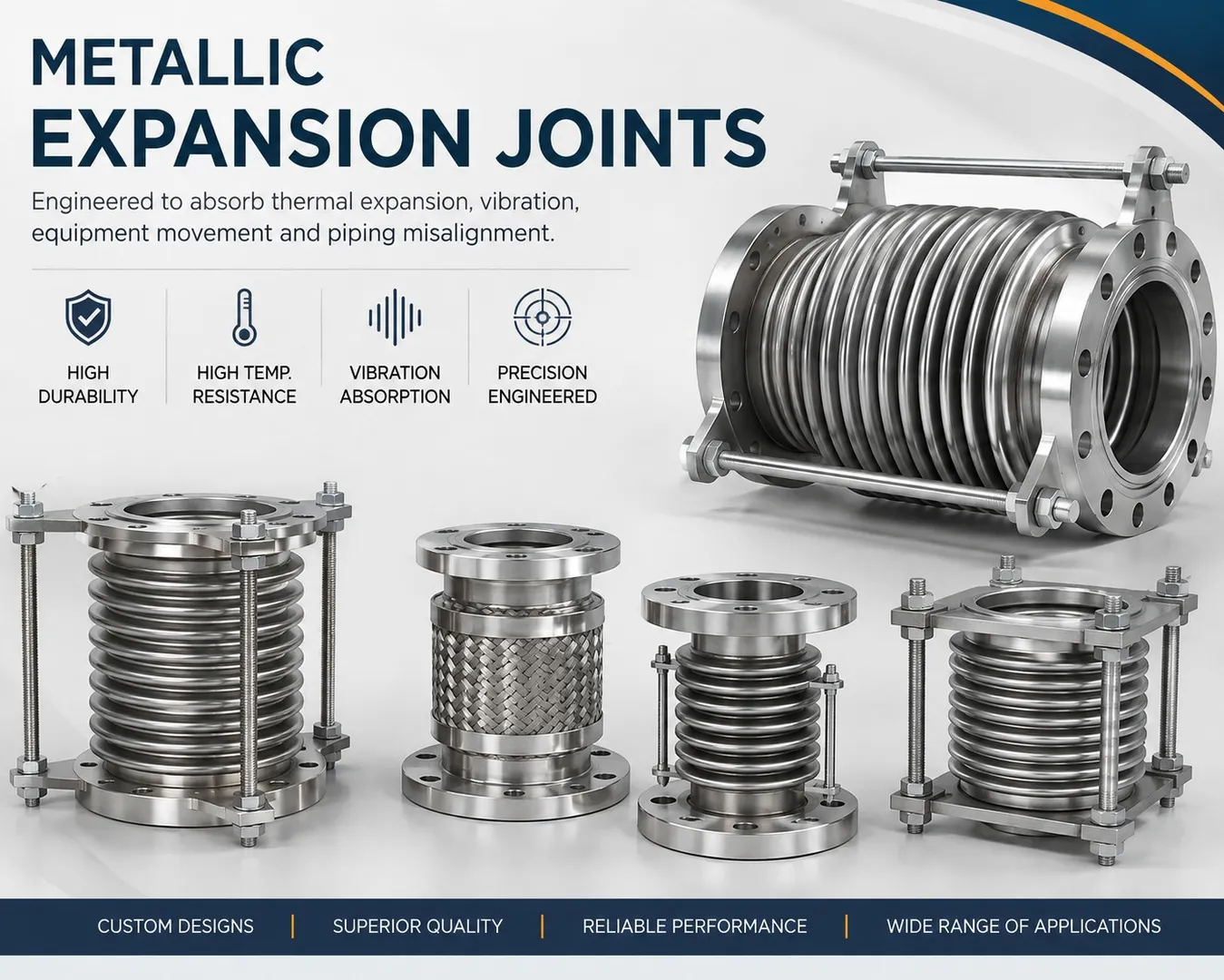
Industrial pipelines rarely remain completely stationary during operation. Changes in temperature can cause pipes, ducts, and connected equipment to expand or contract, creating stresses that must be controlled. Metallic Expansion Joints are engineered to accommodate this movement while maintaining the integrity of the piping system.
This becomes particularly important in process industries where pipelines carry steam, hot gases, chemicals, oils, or other media at varying temperatures. Industrial facilities in Vadodara and other manufacturing regions of Gujarat often operate interconnected piping networks where uncontrolled thermal expansion can place additional loads on pumps, valves, vessels, supports, and equipment nozzles.
A metallic expansion joint normally uses one or more flexible metal bellows as its movement-absorbing element. Depending on its design, the joint may accommodate axial compression or extension, lateral movement, angular movement, or a combination of movements.
Several factors influence expansion joint selection:
- Operating and design temperature
- Internal or external pressure
- Pipe diameter and configuration
- Required movement
- Number of expected operating cycles
- Process medium
- Material compatibility
- Installation conditions
- External loads and vibration
The amount and direction of movement are especially important. Selecting an expansion joint only according to pipe diameter can result in a design that does not match actual operating conditions. Engineers need to understand how the piping will move and where anchors and guides are positioned before deciding on the appropriate configuration.
Material selection also matters. Stainless steels and other suitable alloys may be selected depending on temperature, corrosion conditions, process media, and service life expectations. The bellows must remain flexible enough to accommodate repeated movement without compromising pressure containment.
Proper installation is equally important. An expansion joint should not be used to compensate for arbitrary piping misalignment unless the design specifically allows it. Incorrect installation, poor anchoring, unsuitable guiding, or unexpected torsion can shorten service life.
For industries around Vadodara, where chemical processing, engineering, power, pharmaceutical, petrochemical, and manufacturing applications can involve demanding piping conditions, expansion joints should therefore be treated as engineered piping components rather than simple connectors.
Mahantam Engineering & Services works with industrial requirements involving metallic bellows and expansion joint solutions based on application parameters. A technically evaluated design helps ensure that the component performs the movement-control function expected from it while integrating correctly with the surrounding piping system.
Understanding temperature, pressure, movement, material, and piping arrangement before specifying a metallic expansion joint is ultimately the foundation of reliable selection.
Keywords