

Long pipelines expand and contract as operating temperatures change. If this movement is not managed correctly, it can place excessive loads on anchors, supports, equipment nozzles, and welded connections. Axial expansion joints offer a compact way to absorb movement along the length of a straight pipe section.
Mahantam Engineering & Services designs and manufactures axial expansion joints in Vadodara for industrial piping and ducting applications. Their suitability depends on the expected movement, internal pressure, operating temperature, cycle life, and surrounding pipe-support arrangement.
How an Axial Expansion Joint Works
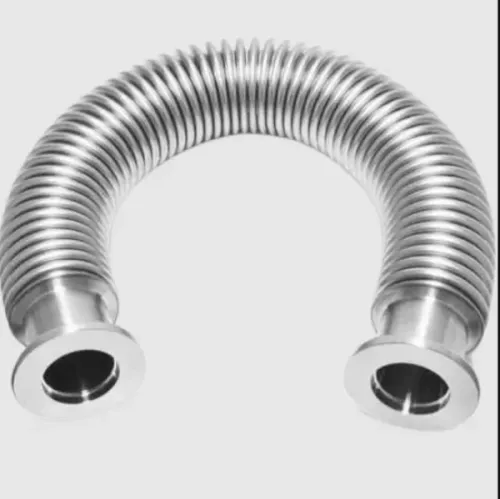
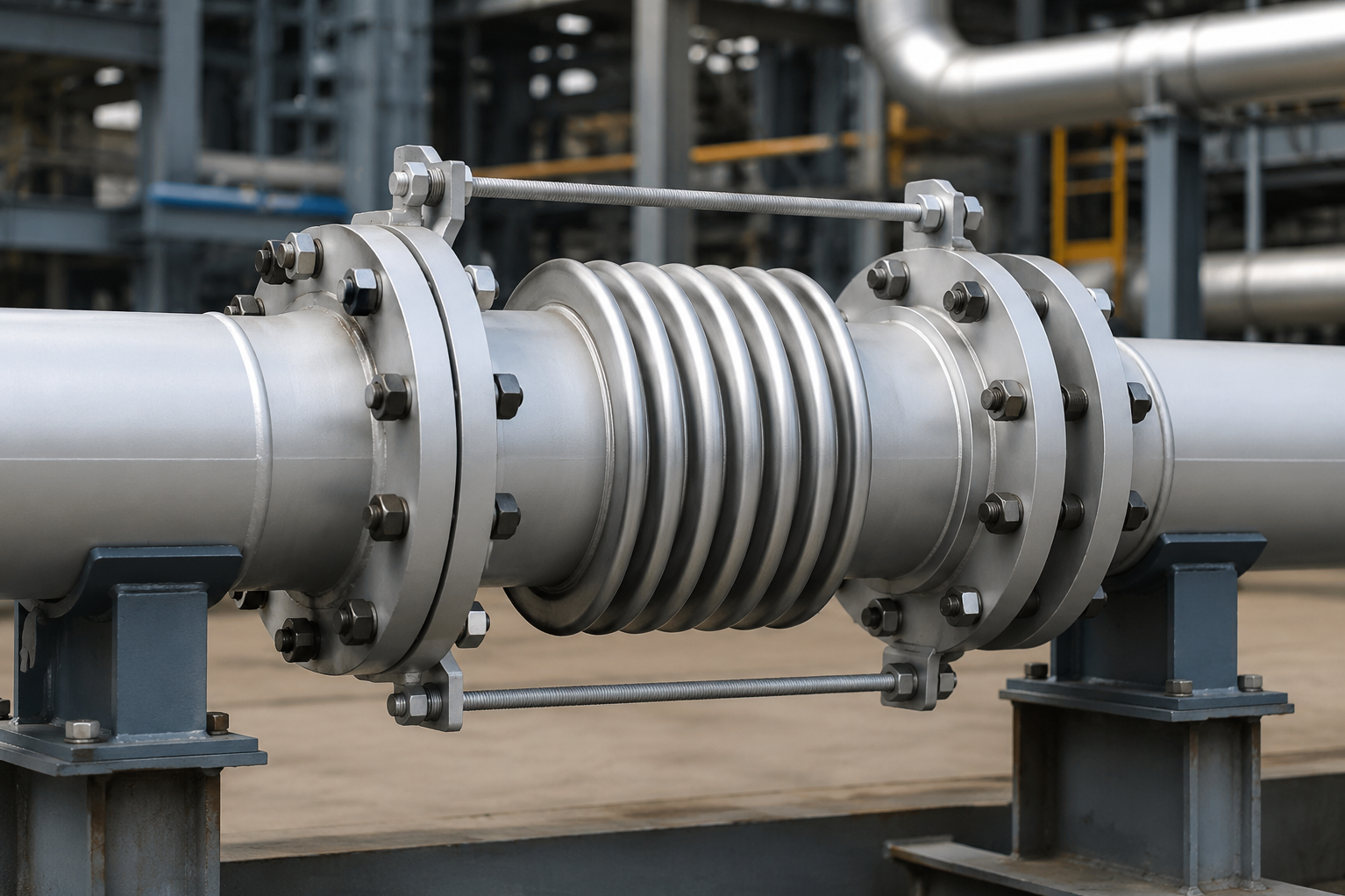
An axial expansion joint generally contains a metallic bellows connected between two pipe ends or flanges. When the pipeline expands, the bellows compresses. When the pipe contracts, it extends.
The primary purpose is to accommodate movement parallel to the pipe axis. While a bellows may tolerate limited lateral or angular movement, these movements should not be assumed unless they have been included in the approved design.
Axial joints are frequently used in:
- Steam and condensate pipelines
- Hot-water circulation systems
- Chemical process lines
- Exhaust and gas ducts
- Power plant piping
- Refinery utility systems
- Steel and cement plant applications
- Thermal fluid pipelines
When Is an Axial Joint a Suitable Choice?
An axial expansion joint may be suitable when the piping follows a reasonably straight route and the thermal movement occurs mainly in one direction. It can provide a compact alternative where there is insufficient space for a large pipe loop.
Its suitability should be evaluated when:
- The required movement is predominantly axial
- Main anchors can withstand pressure thrust
- Intermediate anchors can divide long pipe runs
- Guides can maintain correct pipe alignment
- Adequate access is available for inspection
- The operating cycles are known
- Installation dimensions can be controlled accurately
A joint should not be selected solely because its nominal diameter matches the pipeline.
Axial Expansion Joint Compared with a Pipe Loop
Both methods can manage thermal expansion, but they affect the piping system differently.
A pipe expansion loop uses pipe bends and additional routing to create flexibility. It does not contain a bellows and can offer a long service life where sufficient space is available. However, it occupies considerable area and may add pipe weight, supports, insulation, and pressure loss.
An axial expansion joint requires much less installation space. It can simplify routing but needs carefully designed anchors and guides. The bellows is also a movement-sensitive component that must remain within its specified operating limits.
The better option depends on:
- Available plant space
- Pipe diameter
- Thermal growth
- Internal pressure
- Allowable equipment loads
- Maintenance access
- Project and lifecycle costs
Why Anchors and Guides Are Essential
Internal pressure creates a force that attempts to extend the bellows. In an unrestrained axial design, the piping anchors must resist this pressure thrust along with friction and movement-related forces.
Guides prevent the pipe from buckling or shifting laterally. The first guide is usually positioned close to the joint, followed by additional guides based on the piping analysis and applicable engineering practices.
Common problems caused by poor support design include:
- Bellows squirm
- Uneven convolution deformation
- Excessive lateral displacement
- Damage to adjoining equipment
- Joint overextension
- Premature fatigue failure
Data Required for Selection in Vadodara
Industrial plants in Vadodara and across Gujarat operate pipelines carrying steam, process chemicals, hot gases, and utility fluids. Reliable design requires information such as pipe size, material, temperature range, pressure, movement, flow medium, cycle life, and anchor locations.
The company’s in-house engineering team develops custom configurations using stainless steel and specialist alloys such as Inconel, Monel, and Hastelloy where application conditions require them. Designs can be developed in line with EJMA 10th Edition practices and relevant project specifications.
Before placing an axial expansion joint into service, confirm the cold-set requirement, installation gap, flow direction, anchor readiness, guide alignment, and shipping-restraint removal procedure. Sharing complete piping and operating data with the manufacturer is the most effective way to obtain a joint suited to the actual system.