Choosing the wrong bellows during a shutdown can change a duct’s leakage behaviour, a pipe system’s anchor loads, or the number of maintenance interventions after restart. By the end, you will be able to classify the joint, assemble the design data, compare quotations on a like-for-like basis, and decide when neither fabric nor metal is suitable.
Key takeaways
- Use fabric bellows for duct movement without a process-pressure boundary.
- Use metal bellows when the joint must retain pipe pressure or vacuum.
- Recover drawings, dimensions and failed-part evidence before ordering a replacement.
- Check face-to-face length, bolt pattern and liner clearance at the shutdown site.
Start with the pressure boundary: duct joint or pipe joint?
A duct joint handles movement in an air or flue-gas casing; a pipe joint must also retain process pressure or vacuum. That pressure boundary decides the category before temperature, dimensions or supplier location enter the discussion.
| Option | What it means | When it applies |
|---|---|---|
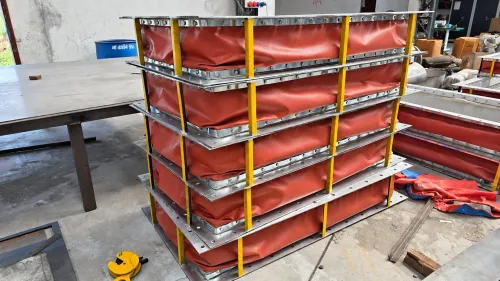
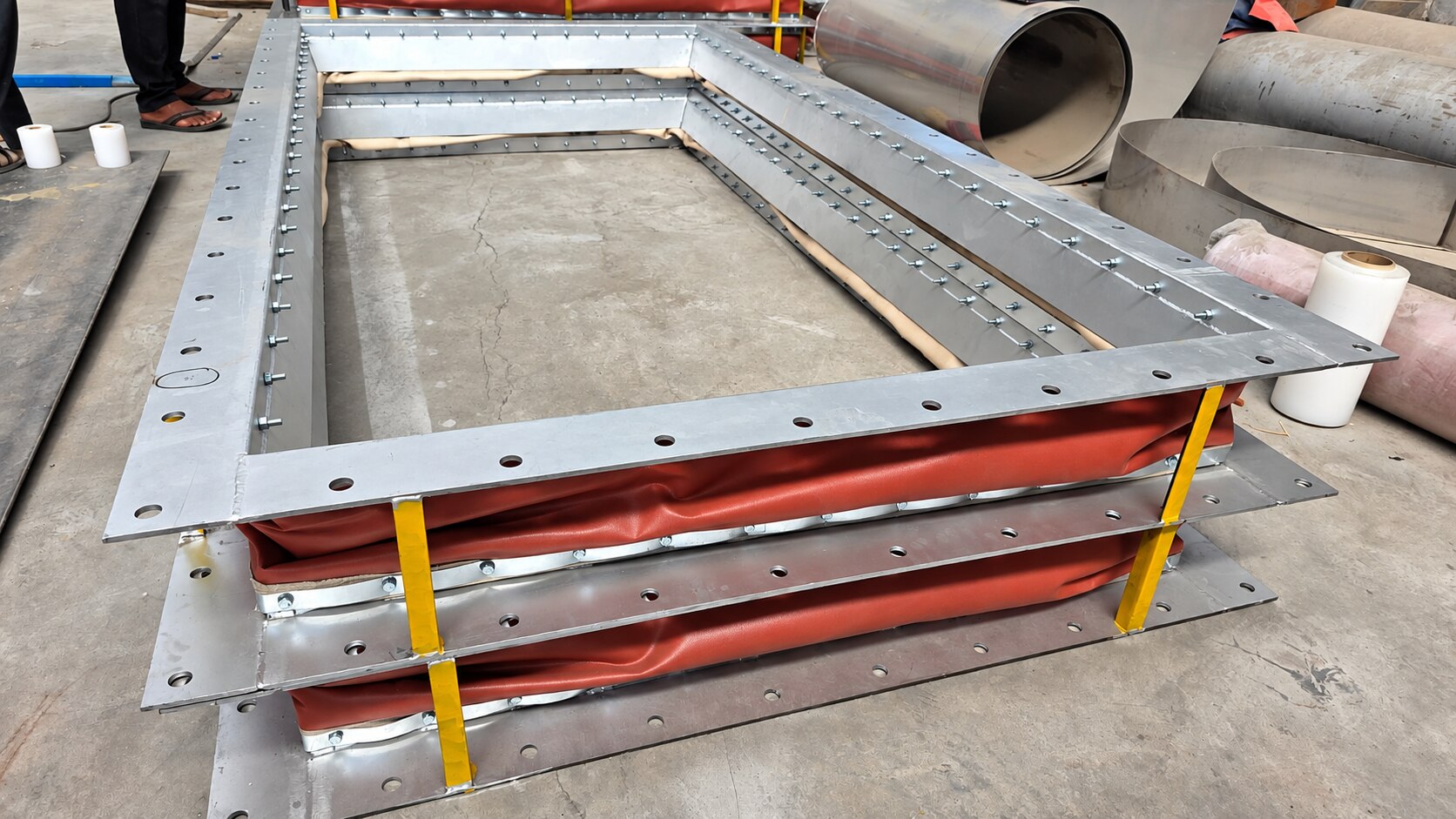
| Fabric bellows | Layered flexible seal and insulation system with limited pressure-thrust restraint | Low-pressure air, flue-gas or exhaust ducts needing large axial or lateral movement, vibration isolation, thermal insulation or misalignment tolerance |
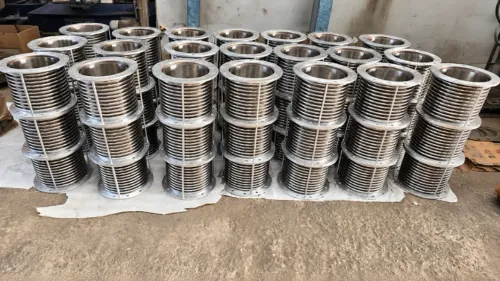
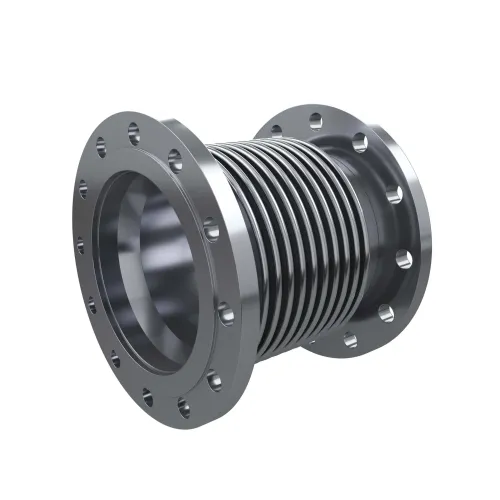
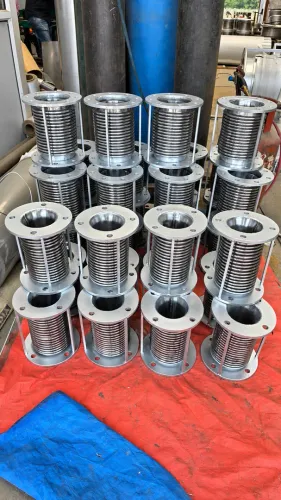
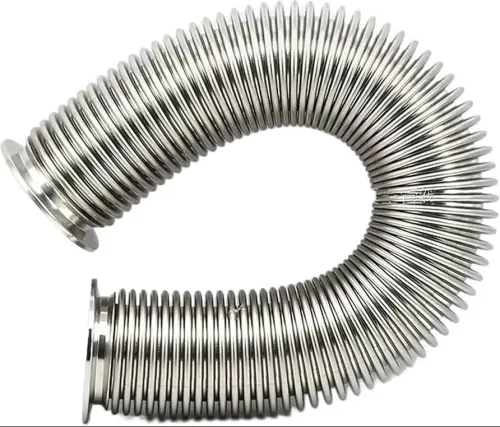
| Metal bellows | Formed pressure-retaining element designed for movement and fatigue life | Pressurised or vacuum pipework requiring controlled axial, lateral or angular movement |
| Neither by default | A joint is not justified without a defined movement and duty envelope | Fixed ducting or piping, or systems where a hose, sliding joint, packed expansion joint or redesigned support arrangement better fits |
For fabric expansion bellows versus metal bellows in Vadodara, treat “in Vadodara” as a sourcing and shutdown-response factor, not a technical grade. Select fabric when the surrounding duct, casing and hardware carry system loads; do not use it as the sole pressure boundary for pressurised process piping.
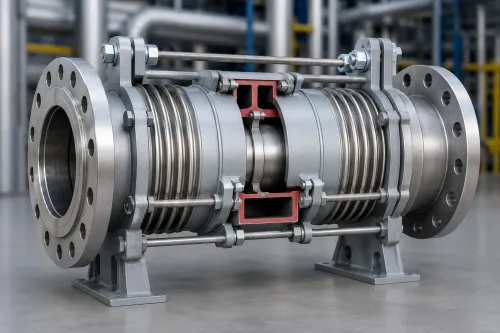
Choose metal only after checking the pressure-thrust path. An unrestrained bellows can load anchors, equipment nozzles and guides, while a metal replacement can reduce misalignment tolerance and increase installation effort.
Before approving either type, record:
- Design and operating pressure or vacuum
- Design and operating temperature
- Gas or liquid medium, chemistry and abrasion
- Axial, lateral and angular movement
- Vibration, flow velocity, cycle count and face-to-face length
- Anchors, guides, liners, insulation and fire requirements
Compare the duty, not just the material
Pressure, movement and leakage consequences decide the construction. A fabric joint suits a low-pressure duct carrying air, flue gas or exhaust when large axial or lateral movement, vibration isolation, thermal insulation or duct misalignment dominates. A metal bellows suits a pipe joint when the bellows must retain pressure or vacuum and survive defined movement cycles.
| Option | Duty indicators | Main risks to check |
|---|---|---|
| Fabric expansion bellows | Low pressure; large axial or lateral movement; vibration; insulated ducts; misalignment; leakage tolerance within the gas-seal design | Gas-seal-layer damage, hot spots, abrasion, chemical attack, hardened fabric, exposed insulation and seam separation |
| Metal bellows | Pressurised liquid or gas; pressure or vacuum boundary; controlled axial, lateral or angular movement; stated fatigue life | Squirm, corrosion, weld defects, liner damage, excessive movement and insufficient or excessive convolutions |
| Neither by default | Severe abrasion, incompatible chemicals, unverified temperature, pressure, vacuum or movement envelope | Premature leakage, rupture or a replacement that cannot be installed safely |
Specify operating and design temperature, pressure or vacuum, medium, flow velocity, movement in each direction, vibration, dimensions, insulation and face-to-face length before approving either option. For fabric, identify every layer, seam construction, temperature limit and chemical compatibility; an intact outer cover can hide a failed gas seal.
For metal, state the required operating cycles and check combined axial, lateral and angular movement rather than axial travel alone.
A shutdown location affects survey attendance, fabrication lead time, spares and installation support—not the grade. Search terms such as fabric expansion bellows in Vadodara and metal bellows in Vadodara identify sourcing options; your duty data makes the selection.
Recover the original design from drawings and failed parts
Do not approve a replacement because its face-to-face length and nominal diameter match the old part. “Equivalent size” does not prove functional equivalence; recover the duty, construction and installation constraints from the records and the failed joint.
1. Obtain the latest marked-up dimensional drawing: face-to-face length, bolt-hole circle, flange or frame details, duct or pipe size, liner position, flow direction and available installation clearance.
2. Record operating and design temperature, pressure or vacuum, medium, flow velocity, vibration and the required axial, lateral and angular movement. For a metal bellows, add anchor loads, guide spacing, liner requirements and calculated cycle life.
3. Identify every material layer. For a fabric joint, specify the gas-seal layer, insulation or packing layers, outer weather or abrasion cover, seam construction, chemical compatibility and temperature limit; for metal, record bellows alloy, liner, collars and weld materials.
4. Photograph and measure the failed part before disposal. Mark cracks, rubbed areas, distortion, leaks, detached layers, weld damage and convolution dents against the drawing and service direction.
5. State installation orientation, support arrangements, shipping protection, inspection tests and acceptance records. Require dimensional checks, material certificates, leak or pressure tests and the named inspection standard in the quotation.
6. Tie the replacement procedure and delivery date to the outage: removal sequence, temporary supports, flange access, cold alignment, hot dimensions, storage protection and the person responsible for final fit-up.
Reject any quotation that omits movement capability or assumes the joint will correct pipe misalignment. Forced alignment consumes fatigue life before commissioning.
Make the shutdown replacement fit the installation
A replacement that matches the nominal duct size can still fail on the first heat-up. Before removing the old joint, freeze the actual installation dimensions and movement envelope; a fabric bellow replacement in Vadodara must be based on the installed joint, not the equipment nameplate.
1. Measure face-to-face length, opening dimensions, flange or clamp details, bolt-circle diameter, hole pattern, liner position, insulation thickness and the clearance available for removal. Photograph each connection and mark flow direction and installation orientation.
2. Record axial, lateral and angular movement, vibration, operating and upset temperatures, pressure or vacuum, gas composition, flow direction and abrasion sources. A shutdown bellow supplier in Vadodara should receive this data with the enquiry.
3. Confirm whether the replacement is fabric or metallic before approving dimensions. Changing from metal to fabric can alter pressure containment, thrust loads, electrical continuity, fire performance and insulation clearance; changing from fabric to metal can increase anchor loads and punish misalignment.
4. Require a marked-up dimensional drawing, material and temperature schedule, movement statement, inspection plan, replacement procedure and delivery date tied to the outage. “Equivalent size” is not functional equivalence.
5. Isolate, depressurise, drain and cool the line before cutting out the joint. Protect nearby liners and insulation, then check fixed points, guides, anchors and pipe alignment; never force a metal bellows to correct misalignment.
Mahantam Engineering & Services can contribute useful field-service input where access, removal sequence or installation alignment threatens the shutdown schedule. Inspect the installed joint after fit-up, verify bolt tightening and clearance, and record photographs before commissioning.
Related product
 | Expansion Bellow MAHANTAM presents a wide range of flexible and durable expansion bellows or expansion joints. View product → |
Use failure evidence to choose the next construction
Inspection findings should change the next bellows construction, not merely confirm the old dimensions. A torn outer cover does not prove the gas-seal layer is sound; inspect each fabric layer and record leakage traces, hot spots, rubbing, seam separation, exposed insulation and loose clamps.
For metal bellows, map cracks, corrosion, weld defects, liner damage and convolution deformation against the movement history.
Use the evidence to revise the specification:
- Hardening or embrittlement: replace the affected fabric layer with materials matched to measured temperature and chemical exposure.
- Frayed seams or leakage: specify seam construction and gas-seal integrity; do not solve a failed seal with a thicker weather cover.
- Rubbing, hot spots or exposed insulation: correct liner clearance, insulation arrangement and support before selecting the replacement.
- Metal fatigue: recalculate axial, lateral and angular movement, convolution count, squirm resistance and required operating cycles.
- Misalignment or forced installation: repair pipe supports and alignment; do not use the new bellows as a correction device.
| Finding | Change to the next construction | Confirm before release |
|---|---|---|
| Fabric damage behind an intact cover | Specify the complete multilayer assembly, not only the outer fabric | Layer materials, seam details, temperature limits and chemical compatibility |
| Metal fatigue with combined movements | Recalculate cycle life and movement interaction; reject a dimensional-only replacement | Cycle count, pressure, corrosion allowance and liner support |
| Switching fabric and metal designs | Require an engineering recheck for pressure, thrust, fire performance and access | Anchors, guides, electrical continuity and installation loads |
Frequently asked questions
How do you decide between fabric and metal bellows?
Identify whether the joint belongs to an air or flue-gas duct, or must retain process pressure or vacuum. Then compare temperature, movement, corrosion, vibration and cycle duty.
What information do you need before replacing a shutdown bellow?
Collect the original drawings, nameplate data, operating conditions, face-to-face length, bolt pattern, liner details and photographs of the failed part.
Why must the replacement fit be checked at the installation?
Confirm the installed gap, duct or pipe alignment, bolt-hole position, liner clearance and access for removal before fabrication.
How does failure evidence affect the next bellows design?
Inspect cracks, leaks, abrasion, erosion, deposits, bolt damage and distortion. Match each failure mode to a construction change rather than repeating the original specification.
Keywords